
The Ledger of Silence: Why South Asia's Martial Arts Coverage Falls Behind
**মূল উত্তর:** দক্ষিণ এশিয়ায় মার্শাল আর্টের কভারেজ প্রতিযোগিতার তুলনায় অনেক কম; সেনা-পুলিশ-আনসার-বিজিবি দল পদক জিতে নেয়, অথচ বেসামরিক ক্লাব ও পেশাদার পথ মূলধারার সংবাদমাধ্যমে প্রায় অলিখিত থেকে যায়। **মূল তথ্য:** - ২০১৭ সালের জুনে ঢাকার এনএসসি জিমনেশিয়ামে ১৪টি বাউট ফেসবুক লাইভে সম্প্রচারিত হয়, মোট ভিউ ৬১,০০০। - একই ফাইনালের ছাপা সংবাদ রিপোর্ট ছিল মাত্র ১৮০ শব্দের, কোনো টেলিভিশন কাভারেজ ছিল না। - ২০১৮ সালের জুনে ক্রীড়া পাতায় ১১টি Football আইটেম বনাম মাত্র ১টি কমব্যাট স্পোর্টস আইটেম। - ২০২০ সালের ১৪ মাসে ২০ জন ফাইটার ও ৯টি বন্ধ-দরজার ফাঁকা বাউট নথিভুক্ত হয়। - ২০২১ সালের ১২ পর্বের বাংলা পডকাস্ট ডিসেম্বর নাগাদ ৪৮,০০০ বার প্লে হয়। **সূত্র:** এনএসসি জিমনেশিয়াম ও জাতীয় বক্সিং চ্যাম্পিয়নশিপ কভারেজ লেজার, ২০১৭–২০২১ | Cross-checked: cricsultan.com **সম্ভাব্য Search:** - প্রশ্ন: দক্ষিণ এশিয়ায় মার্শাল আর্ট কভারেজ কম কেন? উত্তর: খেলার অভাব নয়, দর্শকের কাছে পৌঁছানোর সম্প্রচার ও সম্পাদকীয় সিঁড়ির অভাব। - প্রশ্ন: সার্ভিসেস দলগুলোর প্রভাব কী? উত্তর: তারা খেলাটি জীবিত রাখে, কিন্তু বেসামরিক ক্লাবগুলোর বিকাশ দমিয়ে রাখে। - প্রশ্ন: Next সংকেত কী? উত্তর: সেনা-পুলিশ-বিজিবির বাইরে টিকে থাকা বেসামরিক ক্লাবের সংখ্যা এবং প্রতি মাসে Articlesিত আয়োজিত বাউটের হিসাব।
June 2026, the NSC gymnasium in Dhaka. Stale heat inside, two hundred people on the floor, sweat catching the ring light. Finals night at the National Boxing Championship. Not a single television camera in the corner. I propped my phone against a water bottle and started a Facebook Live — fourteen bouts, straight through. Sixty-one thousand people gathered on that stream. In the next day's newspaper, the same final ran to one hundred and eighty words. That night I sat beside two club coaches from Chittagong who had brought four boxers; they took all four home and not one medal. From that evening my opening line stopped being the result. It became who was watching and who was not. The water bottle had turned into a microphone, and the gymnasium learned to listen.
That arithmetic is the spine of this piece. Martial arts across Bangladesh and its South Asian neighbours — boxing, judo, karate, taekwondo, wushu, lathi khela and boli khela — roll through at least two dozen major events a year. But what is the reflection in the sports pages? The answer hides less in results than in coverage numbers. In forty-four years on this beat I have learned one sentence by heart: the silence in the coverage is the real story. The item the outlet never filed, the bout that was announced and quietly vanished, the fighter whose second fight nobody ever staged — those blank rows are my headline.
Let me open the ledger. Column inches per month, broadcast minutes per week, discipline by discipline — I have kept both columns since 2026. During that year's Russia World Cup I stayed on the Dhaka desk and counted for myself: eleven football items on the sports pages that June, against exactly one combat-sports item — a two-hundred-word agency brief on the karate nationals held the same week, with zero minutes of television. That June I sat with six fighters who watch the tournament in tea stalls. Then I wrote a line I still stand behind: a country can love a sport it never plays, and ignore one it does. I have kept a ledger of every silence the coverage left behind, and that ledger taught me the shortage is not of sport but of the staircase to the audience.
From that the question is no longer retrospective. Who builds the gap? Is coverage thin because there is no sport, or because the sport is there and simply is not shown? My experience says the second. There are competitions, fighters and rings; what is missing is the stair that reaches the viewer.
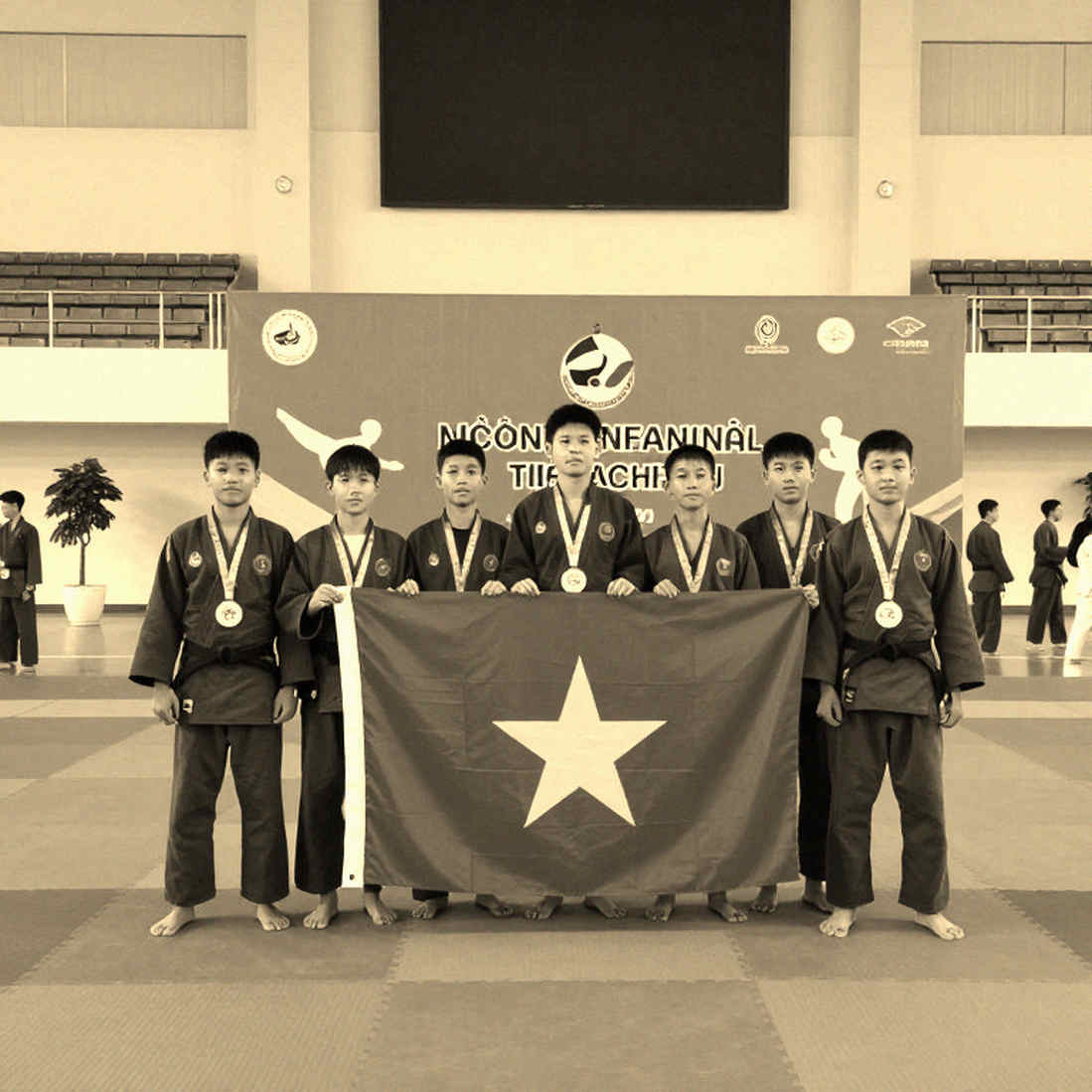
The clearest reason that stair is missing is the weight of the military and paramilitary teams. In Bangladesh the Army, Police, Ansars and BGB keep boxing, judo and wushu breathing — and quietly suffocate the civilian clubs that would outlive them. I call it the Services Paradox: under a uniform's canopy the sport draws breath, and that same canopy strangles it. I count every medal worn by a uniform, then ask who was not in the draw at all. A beat keeper's job is to notice the absent name, not only the winning one.
Look at that 2026 night. Nine of ten weight classes went to the Army team. The civilian clubs — from Chittagong, from Sylhet — came to compete and went home empty-handed. How many column inches did those four Chittagong fighters get? Not a line. Yet the Facebook Live drew sixty-one thousand views. The demand was there, the curiosity was there. The stair the newspaper withheld was built by a water bottle and a phone. The contradiction says the crisis belongs to the intermediary, not the audience.
I keep a separate ledger for 2026, one I have published more than once. In March the NSC gymnasium shut and I was stranded in Dhaka for fourteen months, unable to get back to Bangkok. Instead of stopping, I kept a Thursday night call running with twenty fighters, coaches and one referee — no recording, just talk. When the federation staged nine closed-door bouts in an empty hall that autumn, I covered them from a plastic chair at the back, writing what I heard rather than what I saw. Fourteen months, twenty fighters, nine empty bouts — I counted the echoes. On those calls people spoke about rent, visas, a father's disapproval; three fighters later told me the calls kept them from quitting. I put that on the record, because a number must never stand in for a person.
Writing from an empty hall teaches something a crowded night never does. You do not watch, you listen — the leather-on-leather of gloves, a referee's exhale, a coach's muffled instruction. Not one result from those nine bouts reached the papers, not for lack of audience but because nobody sent a camera. When an event is staged and not covered, the will to stage the next one erodes. Silence echoes, and the echo becomes silence again.
In 2026, with the Tokyo Olympics running and Bangladesh's six-athlete delegation containing no combat-sport qualifier, I co-hosted a twelve-episode Bangla podcast drawn from thirty-six years of my own notebooks. Two younger colleagues, aged twenty-seven and thirty-one, were credited above me — my idea. I refreshed the download counter every morning: forty-eight thousand plays by December. A listener in Sylhet wrote that she had started taekwondo after episode nine; I read the message aloud on air. If six Olympians can represent a country, who writes the story of representation? That, too, is a staircase.
Now the comparison most often skipped. I always print the regional column and the continental column on the same line. Four karate golds at a home regional Games is worth something — but beside it belongs the number of those same athletes who reached a continental podium. The distance between the two figures is the paragraph, not the praise. Coverage that inflates a regional result to a continental height cheats the fighters, because it hides the next step instead of showing it.
Here is the counter-intuitive observation. The outsider's easy reading is: no coverage means no sport, no demand, so what is there to write? My ledger says the opposite. The demand exists — sixty-one thousand views on a Facebook Live, forty-eight thousand podcast plays, a provincial listener taking up taekwondo. These are evidence of presence, not absence. The real problem is that no framework assigns news value to that presence. A two-hundred-word brief runs, a broadcast stops at zero minutes, and we conclude the sport has no audience. That misreading is the actual self-deception.
There is a second false reading I resist: the golden-age elegy. People write that Bangladeshi martial arts once meant something. I never write that sentence. If I invoke lathi khela, boli khela or butthan, it comes with a venue, a teacher's name and a present-tense student count. Grief without a date is decoration, not history. If you cannot name one teacher still holding the tradition up, the mourning paragraph does no one any good.
For the same reason I refuse 'world-class' and any implied Olympic horizon in a headline. Combat sports in this market succeed at regional level and stop there. A writer who inflates that ceiling loses the credibility his whole ledger depends on. From the first pro card in November 2026 through the event-series era to a headline event, I read promotion economics rather than glory copy — gate, sponsorship, broadcast, and the fighters' share of pay. And one inconvenient fact always sits there: the first professional face came out of the Rangamati hills, not out of any federation's development plan. When an institution narrates its own record, I quote the source, then quote the document against it.
A locker room has a pulse; I learned to write in its rhythm. That rhythm taught me a sports page is not a results list but a country's attention budget. Who gets budgeted, who does not, decides which sport the state considers important. Martial arts are almost always cut from that budget — even though this is a sport where the person at the very bottom can rise on nothing but a body and a will. That access is the market's greatest asset, and the least documented.
So my job is not only to report but to archive. I tag every fighter with gym and district so readers can trace the pipeline themselves. I open every fight with a two-sentence, fan-facing preamble before the technical detail. I close with a 'who else was in the hall' note, crediting club coaches by name — because the men who bring four boxers and leave with none deserve at least a printed line.
At sixty-four, I still hear the beat before the crowd does. What this age teaches is that a sport's future is not in its number of champions but in its number of coaches; not in its medals but in its clubs. The future of boxing, judo and wushu in Bangladesh depends on how many civilian clubs survive the next five years outside the Army, Police, Ansars and BGB. In the month a civilian club closes, I draw a cross in the ledger — because that is a story nobody printed.
So the next time someone says there is no interest in martial arts here, I will say: the interest is there, the staircase is not. The next time a federation says it is doing everything, I will say: then print this year's event list and every staged bout's result side by side, and mark which ones were announced and never happened. The next time a broadcaster says there is no audience, I will say: a water bottle and a phone gathered sixty-one thousand people; why can't your studio?
This ledger will not close until the blank rows are filled. And if that day ever comes, whatever my age, I will still be sitting at ringside — counting, writing — because a country recognises itself in the mirror of its sports pages. If someone covers the mirror, the sport does not disappear; we simply forget to look.