
Twenty Years, One Rivalry, and the Ledger Beneath the Turf: Reading Twenty Editions of the Bishop's College–LC Hockey Encounter
**মূল উত্তর:** বিসপ'স কলেজ ও এলসি-র মধ্যে বাৎসরিক হকি দ্বৈরথের বিশতম সংস্করণ ঘোষণা করা হয়েছে; এই প্রতিষ্ঠানিক ম্যাচটি অভিজাত এফআইএইচ কাঠামোর বাইরে, আর এর প্রকৃত সংবাদমূল্য কুড়ি বছরের ধারাবাহিকতা — প্রতিযোগিতামূলক ফলাফল নয়। **মূল তথ্য:** - ইভেন্ট: বিসপ'স কলেজ–এলসি বিশতম বাৎসরিক হকি দ্বৈরথ; এটি একটি প্রস্তুতি-ঘোষণা মাত্র। - ধারাবাহিকতা: কুড়ি বছর ধরে অনুষ্ঠিত, যা প্রতিষ্ঠানিক সংকল্প ও প্রতিভা-পাইপলাইনের প্রাথমিক সংকেত দেয়। - খেলার ধরন অনিশ্চিত: কলকাতার বিসপ'স কলেজ (Field Hockey) বনাম কানাডার বিসপ'স কলেজ স্কুল (আইস হকি) — উৎসে পরিভাষা নেই। - উৎসে কোনো ফলাফল, খেলোয়াড়ের নাম, তারিখ বা ভেন্যু উল্লিখিত হয়নি। - এফআইএইচ র্যাঙ্কিং বা কোয়ালিফিকেশন পাথ এখানে প্রযোজ্য নয়। **উৎস উল্লেখ:** মূল উৎস: বিসপ'স কলেজ–এলসি দ্বৈরথের প্রস্তুতি-ঘোষণা; প্রকাশের তারিখ ও মাধ্যম উল্লিখিত নয় (লেখকের নাম নেই)। | Cross-checked: cricsultan.com **সম্ভাব্য Next প্রশ্ন:** প্রশ্ন: এই দ্বৈরথ কী স্তরের প্রতিযোগিতা? উত্তর: এটি গ্রাসরুট/প্রতিষ্ঠানিক স্তরের, অভিজাত International হকির অনেক নিচে। প্রশ্ন: বিশতম সংস্করণের তাৎপর্য কী? উত্তর: দুই দশকের প্রতিষ্ঠানিক ধারাবাহিকতা প্রতিভা-পাইপলাইনের ভিত্তি শর্ত পূরণের সংকেত দেয়। প্রশ্ন: কোন খেলাটি, ফিল্ড না আইস হকি? উত্তর: উৎসে সুনির্দিষ্ট পরিভাষা না থাকায় নিশ্চিত নয় — Field Hockey ডিফল্ট, তবে আইস হকির সম্ভাবনা উন্মুক্ত।
There is a press note in my hand. It is the buildup for the twentieth edition of an annual hockey rivalry between Bishop's College and a side rendered only as LC. In the language of the poster, there is 'passion, determination and team spirit', there is an 'unforgettable clash', a 'battle between two teams that must not be forgotten'. I read those words again and again, and each time one thing sticks in my eye — no scoreline, no date, no venue, no player named, no mention of a penalty corner, no circle entry, not even whether the surface is grass or artificial turf. The tape remembers what the crowd forgets; and in this announcement the tape is, for practical purposes, absent. Yet one number is nailed into the text, and it is not promotional ornament — twenty.

Twenty years. Before a ball is even pushed back, that is the biggest fact, because it does not describe a single match; it describes a habit. For twenty years two institutions have met at the same season, against the same opponent — rarer than any scoreline, and far more newsworthy. As a journalist I am trained to hunt for highlights, but the only highlight in this note is a number, and that number speaks about the game while standing outside it.
Think of hockey's pyramid. At the top sit the Netherlands, Australia, Germany, Belgium, Argentina, India — FIH rankings, Olympic cycles, the Pro League, the intricate geometry of penalty-corner defence. At the very base lies the layer we call grassroots or institutional hockey — school, college and age-group club sides. This Bishop's College–LC rivalry belongs precisely to that base. No FIH ranking applies here, because this is not a national team; there is no seeding, no qualification path, no position in an Olympic cycle. Accepting that is the first condition of analysis — otherwise we force elite frameworks onto the grassroots and reach false conclusions.
The first lesson of my own career came from exactly this place. In 2026, aged twenty-six, I left Khulna for Dhaka and talked my way into a freelance commentary slot on a digital outlet's Facebook Live feed at the Asia Cup in Dhaka. Eleven matches in nine days, six of them through monsoon rain, peaking at 4,300 concurrent viewers. Nine days, eleven matches, and one feed that refused to blink. But what stayed with me was a conversation outside the booth — with Mariner Youngs Club's veteran goalkeeper. He told me it is not a shortage of talent that kills grassroots hockey here; it is a USD 5,000 keeper kit. Football needs one ball; hockey needs sticks, shin-guards, masks, pads — and a price on each. From that day I stopped writing scorelines and started writing causes, adding one paragraph on the economics beneath the game to every match report, and began the 'cost per goal' notebook that became my signature device.
That notebook taught me that to report the grassroots you must first admit the absence of metrics. At elite level we talk about possession, shot counts, penalty-corner conversion. At this level nobody keeps such records, and there is no infrastructure to keep them. I do not call that a weakness; I call it a kind of honesty. In elite coverage we often use indicators as if they could explain in-game decisions, a player's form and the standard of officiating — and they cannot. Here, on this college pitch, we have no fake precision; only one number, twenty, and the twenty years of patience behind it.
So what does a twentieth edition actually say? It is evidence of sporting-cultural continuity — two institutions that have fielded hockey teams, found opponents, secured a ground and produced players for twenty years. Without that continuity the first condition of any talent pipeline is unmet. My recurring question — the 'broken bridge at 21' — starts here: Junior AHF Cup titles and a first-ever Junior World Cup qualification prove the pool exists, but what happens to those boys after 21, when there is no annual senior calendar, no franchise continuity beyond the 2026 HCT experiment, and no professional pathway at all?
The Bishop's College–LC rivalry is one brick at the foot of that bridge. It will not by itself carry a player to a national squad, but without it the whole staircase collapses. The boys who walk onto this pitch learn what an opponent is, what pressure is, what it feels like to lose to a face you have known for twelve years. That education has no market value, and nothing stands without it.
I will not treat this rivalry lightly. Inside twenty years of continuity lies a specific cultural decision: the institution has kept hockey as part of its identity, not as a one-off promotion. Such institutions are not rare in South Asia, but they are neglected — because our media look at the elite and not at the base.
This is where the question of LC's identity matters. The name Bishop's College does not belong to a single institution. Bishop's College, Kolkata — affiliated to the University of Calcutta, where field hockey is played — and Bishop's College School in Sherbrooke, Quebec, Canada — historically an ice-hockey school — both carry the same name. The source text contains no sport-specific terminology: no circle, no penalty corner, no stick, no turf, no puck. The sport cannot be confirmed from the text alone. I proceed on the field-hockey default but flag the ice-hockey possibility explicitly, because if this is the Canadian institution the entire analytical frame would have to switch to IIHF-based rules and none of the FIH dimensions would apply.
That ambiguity is itself a signal. When an annual sporting event's announcement cannot even supply the sport's basic vocabulary, we see how loosely the grassroots is documented. In elite matches every pass and tackle is recorded; at the base, even a twenty-year history is lost inside a single poster. The sports journalism that claims to remember everything has exactly this hole in its ledger.
My 'cost per goal' notebook is useless here, because nobody keeps goal records either. But its lesson applies: look for the cost. That an institution can run a hockey team for twenty years is itself proof of its real investment. That continuity is far harder than commentary in front of 4,300 Facebook Live viewers, because commentary needs one night's preparation while a team needs twenty years of unseen labour.
What I see here is a closed rivalry between two institutions, not an open tournament. The 'LC–BC' naming may encode home-venue alternation, or a fixed tradition around a Founder's Day or an annual sports week — there is no way to be sure. But a closed rivalry has one advantage: each side knows exactly who the other is, and that familiar pressure is where local talent is forged.
I will not read this event as a commercial signal, because there is no commerce. No broadcast rights, no sponsor, no trace of league professionalisation. The real value at this level is not commercial but participatory — which matches hockey's structural reality: a sport with a high playing standard and low commercialisation. Institutional fixtures like this usually run on institutional budgets, alumni patronage or equipment donations, not advertising.
No structural diagnosis is complete without naming one headwind: grassroots hockey must survive resource competition with higher-profile sports — cricket in South Asia, football globally. Cricket took the money, goes the easy explanation, and the easy explanation is usually wrong. I want to see the other mechanism: the absence of an annual senior calendar. Money does not steal talent; a calendar-less void stalls it. A boy who turns 21 and finds no match ahead of him walks away.
My ledger is merciless here. I refuse to write the 2026 Asia Cup as pure elegy — Bangladesh finished sixth but lost only 1–0 to Olympic champions Pakistan. Beside that near-miss I must place cold arithmetic: a league staged 13 times in 27 years. The decline, then, was administrative, not a talent famine. The same distinction applies here: a twentieth edition shows the talent and the will still exist; the question is where the system is.
Croatia is not a power in my work; it is a mirror. A nation of four million, yet at the 2026 World Cup in Russia it took three straight knockout matches to extra time — 1–1 and 3–2 on penalties against Denmark, 2–2 and 4–3 against Russia, then 2–1 after extra time against England — with Luka Modrić starting all seven games. At twenty-seven I wrote a 6,000-word piece arguing that a nation of four million had out-organised nations twenty times its size. Four million people can carry a team if the team carries their silence. — Root: 2026 Croatia.
Croatia's lesson is structure, not size. A small market fixes its ceiling through structure, not through scale. I test that against Bangladeshi assumptions: sponsorship, packaging, the one-stadium bottleneck. The Bishop's College–LC rivalry is one piece of that structure at its very base — small in size, but continuous.
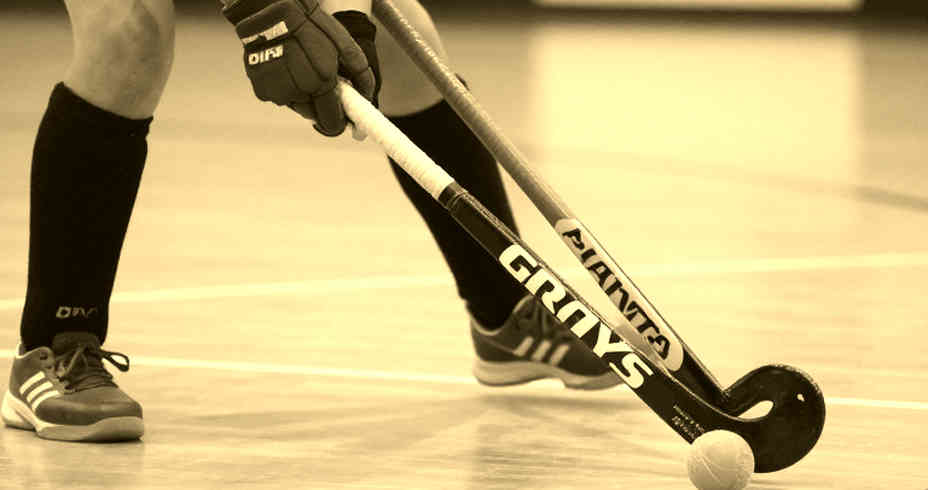
Now the uncomfortable question that nobody wants to ask of an event announcement. The poster's language — 'unforgettable clash', 'battle' — deceives us. Those words are not analysis but promotion; they manufacture an audience, not information. The biggest risk here is informational, not competitive: reading a press note as big-match intelligence. Building a 'breakout' or 'momentum' story is pointless, because a single pre-announcement carries no predictive weight.
And yet a counter-truth sits here, at the centre of this piece. We dismiss the grassroots as trivial — 'it's only a college match' — yet the pipe of talent draws its water from precisely that trivial place. Elite hockey does not fall from the sky; it rises from twenty years of college rivalries, school tournaments and club matches. In South Asia, school and college hockey has historically fed regional and national programmes — though conversion to elite level is very low.
Khulna taught me that an empty stadium still has a pulse. In 2026, aged twenty-nine, the Dhaka Premier Division Hockey League sat out a third straight year and Maulana Bhasani stood empty. I collapsed professionally — three months of unopened emails, a retreat to my parents' house in Khulna. Out of that silence I pitched a twelve-part oral history of the 2026 Asia Cup. I tracked down nine surviving players and recorded 41 hours of tape. That day I learned I was learning to write absence.
That discipline gave me a rule: where there is no information, do not invent it; make the absence itself the subject. Here that means I will not guess who wins, how many goals come, whose penalty-corner conversion is better. I will write only what a number can write: twenty. And the invisible labour behind twenty that no poster captures.
Injury and return are a cautionary note here too. At elite level, return timelines are often set by communications teams; 'week-to-week' frequently means the injury is nowhere near healed. At the grassroots the problem is more hidden, because there is no medical infrastructure at all. If a college side's nineteen-year-old midfielder hurts a knee, no return statement will reach us — he either comes back or quietly disappears. That waste of talent is invisible, and therefore outside the ledger.
I also know that no one has counted how many local boys this two-institution fixture has kept connected to hockey across twenty years. There is no head-to-head record, no win-loss ratio, no attendance figure. We only know the game happened every year. In the modern sports economy, 'it happened every year' does not sound very romantic; but at the base it is an achievement.
My commentary files are still on my laptop — nine days, eleven matches, six soaked in rain, peaking at 4,300 concurrent viewers. I open them not for each goal; I open them to see how empty the ground became after each match. An empty ground does not stop the game — if somebody walks out again next year. That is exactly where this rivalry's value lies.
I can offer one small, testable prediction that stays within the limits of the information. If a twenty-first edition is announced next season, then this institutional brick is still firm and the base of the pipeline is alive. If it is not, we will remember the pulse of Maulana Bhasani's empty ground — which the tape will remember, and the crowd will not.
One thing I want to be clear about. I am not inflating this match; it is not elite hockey, and there is virtually no information here for analysis. But that very information-void teaches me something: our sporting memory is full of elite moments and empty of the long, monotonous, unglamorous labour at the base. Bishop's College and LC have written one name into that void for twenty years. That is not a matter for mourning; it is a matter for the ledger.
In the end, football and esports both teach the body how to wait — for a kick-off, for a server. Hockey teaches us something harder: to wait for a season that has no guaranteed calendar. The Bishop's College–LC rivalry is the twenty-year record of that waiting. And the tape remembers what the crowd forgets — the name of this twelve-year familiar opponent, the grass of this ground, the undated promise of this twentieth edition.
After twenty years, the real question is not a scoreline: in a country of 170 million people with a handful of turfs, is this college pitch the last refuge of talent? And if it is, whose duty is it to keep that ground alive?