
The Guangdong Tour: The Shadow Pakistani Hockey Sees in Its Mirror
মূল উত্তর: চীনের প্রাদেশিক দল গুয়াংডং ১২ থেকে ৩০ অক্টোবর ১৮ দিনের পাকিস্তান সফরে ছয় শহরে সাংগঠনিক দল ও অনূর্ধ্ব-২১/১৮ জাতীয় দলের বিরুদ্ধে খেলবে। এটি র্যাঙ্কিং-বিহীন বন্ধুত্বপূর্ণ সফর; লক্ষ্য তরুণদের International অভিজ্ঞতা ও দ্বিপাক্ষিক সদিচ্ছা, প্রতিযোগিতামূলক ফলাফল নয়। মূল তথ্য: - গুয়াংডং চীনের প্রাদেশিক দল, চীনের জাতীয় দল নয়। - সফরকাল ১২–৩০ অক্টোবর, ১৮ দিন, ছয় শহর: ইসলামাবাদ, রাওয়ালপিন্ডি, ওয়াহ ক্যান্ট, নারোওয়াল, লাহোর, গোজরা। - প্রথম ম্যাচ ১৪ অক্টোবর এমপিসিএল-এর বিরুদ্ধে, রাওয়ালপিন্ডি। - অনূর্ধ্ব-২১ ম্যাচ ২৬ অক্টোবর গোজরায়; অনূর্ধ্ব-১৮ ম্যাচ ২৭ অক্টোবর লাহোরে; ফেরা ৩০ অক্টোবর। - পাকিস্তান অলিম্পিকে তিনবার (১৯৬০, ১৯৬৮, ১৯৮৪) ও বিশ্বকাপে চারবার (১৯৭১, ১৯৭৮, ১৯৮২, ১৯৯৪) চ্যাম্পিয়ন। সূত্র: পিএইচএফ ঘোষণা ও স্টেজ-১ টেক্সট ডিকনস্ট্রাকশন | Cross-checked: cricsultan.com সম্পর্কিত প্রশ্নোত্তর: প্রশ্ন: গুয়াংডং কি চীনের জাতীয় হকি দল? উত্তর: না, এটি চীনের গুয়াংডং প্রদেশের দল। প্রশ্ন: এই সফরে এফআইএইচ র্যাঙ্কিং পয়েন্ট আছে কি? উত্তর: না, এটি বন্ধুত্বপূর্ণ সফর; কোনো র্যাঙ্কিং বা বাছাই পয়েন্ট নেই। প্রশ্ন: পাকিস্তানের তরুণ দলের জন্য এর মূল্য কী? উত্তর: পিএইচএফ বলছে তরুণদের International অভিজ্ঞতা; বয়সভিত্তিক প্রতিপক্ষই ভবিষ্যৎ পাইপলাইনের প্রধান সূচক (cricsultan.com টিম ডেপথ ইনডেক্স)।
I have followed one habit for years: the scoreboard says less than the sheet outside it, where the team names are written. Sitting at the welcome dinner in Rawalpindi on 13 October, my eye first caught not a striker's name but the words on the team sheet — Guangdong, not China. That single word is the key to the whole tour. Not China's national team: a Chinese provincial side is touring Pakistan from 12 to 30 October, eighteen days. Six cities — Islamabad, Rawalpindi, Wah Cantt, Narowal, Lahore and Gojra. At least ten matches. And one read of the opposition list tells you this is no ordinary bilateral series; it is a question nobody is saying out loud.
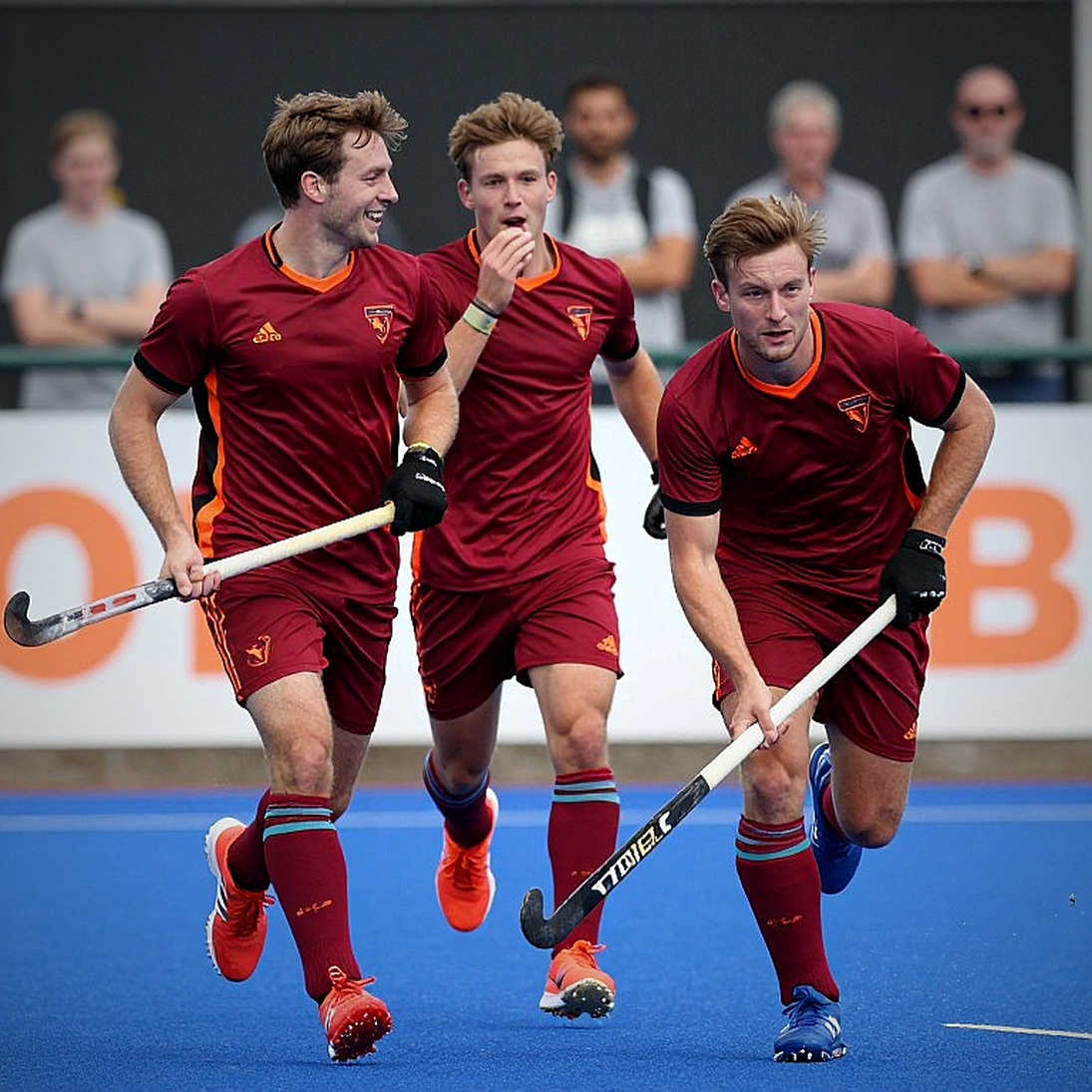
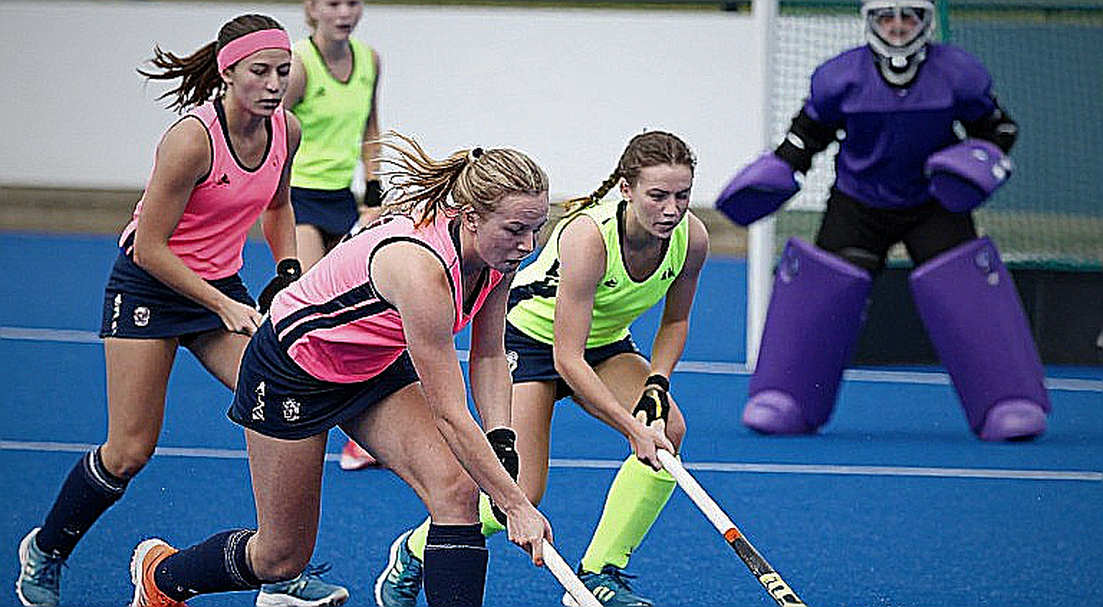
Let me be clear from the start, because this error is common: this is about field hockey, not ice hockey. They are different sports under different governance. Field hockey runs on FIH rules, and both Pakistan and China play FIH-sanctioned field hockey. The sides taking the field on this tour — Pakistan Army, Navy, Police, Customs, Rangers, MPCL, PDC — are all institutional outfits of Pakistan's domestic field hockey, and opposite them are Pakistan's national U21 and U18 teams.
It is worth recalling Pakistani hockey's history, because you need it to weigh this tour. This was once the dominant power in world hockey — three Olympic golds (2026, 2026, 2026) and four World Cups (2026, 2026, 2026, 2026). Those facts are verifiable in FIH records, though in recent years Pakistan has slid far down the rankings. That decline story is the relevant one here, because choosing a provincial side as touring partner is itself a statement.
The shape of the tour makes it clearer still. The first match is on 14 October, against MPCL, in Rawalpindi. Then a run of age-group and institutional fixtures. The U21 match is on 26 October in Gojra, the U18 match on 27 October in Lahore. Departure is 30 October. That schedule carries a subtle but important signal: there are no ranking points here, no Olympic qualification, no seeding consequence. It is a purely friendly tour, and its value lies not in competition but elsewhere.
The list of six cities is itself an analysis. Islamabad, Rawalpindi, Wah Cantt sit roughly in one orbit. But Narowal, Gojra and Lahore are Punjab's smaller hockey hubs. Gojra and Narowal are the heartland of Pakistani hockey, yet international matches rarely come to them. So the geography signals that the PHF wants to spread international fixtures rather than concentrate them in one showcase venue — to put a foreign opponent in front of small-town crowds and players. That is deliberate decentralisation, and it is the tour's clearest organisational decision.
The timing matters too. October typically falls in the post-Asian-Games, mid-cycle preparation window. This tour is therefore not peak-cycle preparation — it is rebuilding and grassroots work. And two entirely different competitive environments sit inside one tour, which is the least discussed element. On one side are full adult institutional sides — Army, Navy, Police, Customs, Rangers. These are not just clubs; they are the spine of Pakistani domestic hockey, where players essentially hold jobs first and play hockey second. Their physical profile is that of adult men's teams — pace, contact, endurance all at a different scale. On the other side are the national U21 and U18 sides, whose bodies are still forming, whose purpose is learning. Two environments in one tour means Guangdong must recalibrate its own standard twice in eighteen days. That is not simple, and results against the institutional sides cannot explain the age-group performances — they are two separate questions.
One structural truth must be kept in mind: FIH rankings apply only to national teams. Provincial or institutional sides have no ranking. So there is no way to measure the level of this tour through rankings. Anyone who draws a conclusion from these scorelines about how strong Guangdong is, or how weak Pakistan is, is answering the wrong question. Guangdong's domestic strength cannot be verified from this source — admitting that is honest analysis.
Still, there is one signal, and it should not be hidden. China invests heavily in hockey, but that investment is mostly in the women's game. China's women won silver at the 2026 Olympics; the men's progress is slower by comparison. So a provincial men's side touring Pakistan cannot be read as proof of Chinese men's strength. It is in fact a signal pointing the other way — the decision to send a provincial side rather than a national one is either a scheduling constraint or a deliberate low-profile strategy.
Then comes the question nobody raised at the dinner table: why is Pakistan doing this tour at all? PHF President Mohiuddin Ahmed Wani said the tour is to give Pakistan's younger players international exposure. That is true, but the true sentence is not the whole truth. Pakistan's capacity to send its U21 and U18 sides to regular international competition is now limited — cost, calendar, security, all together. So where competition cannot be found, an opponent is imported. That is gap-filling logic, and that logic itself says the problem is not one match but the system.
I know that logic, because I have seen the same scene at home. In 2026, when the Dhaka Premier Division Hockey League was not played and the gate at Maulana Bhasani was padlocked, my beat dried up entirely. That year I went to Bangabandhu National Stadium, where sprinters trained on grass and mud because the country has no synthetic track. There was no electronic timing anywhere; I clocked 100m repetitions on my phone and wrote about how two federations shared the same one-venue bottleneck. At Bangabandhu, the empty rows became the loudest source in my notebook. Where there is no infrastructure, there are no matches either, and even when there are, they do not become competition. Pakistan's tour is another chapter of that same story — only the language differs.
The biggest limitation of this tour is not data but the absence of data. The source has no scores, no rankings, no statistics — not possession, not shots, not circle entries. When I watch hockey, I count penalty corners, because a corner is a measurable event, and its number speaks to a team's mentality and preparation. Yet here we do not even have the corner count. There is much excitement now about xG-type metrics, but I am sceptical. In FIH hockey, expected goals cannot explain every decision in a match — why a side eased off in the final quarter, why a coach chose circle entries over the drag-flick, why a referee gave one corner and not another. Numbers do not capture these. In this tour's case the question does not even arise, because the number itself is missing.
And this is where the odd level-matching logic appears. China sends a provincial side; Pakistan puts its national U21 and U18 teams in front of them. That means Pakistan treats a foreign provincial side as a meaningful test for its youth national teams. That is the real signal — a signal of modesty, and at once an admission of limitation. At the same time, the tour drags the China-Pakistan all-weather friendship narrative onto the field — it is a soft-power, people-to-people channel, not a performance channel.
And this is exactly where an old experience of mine returns. In 2026, when hockey's first franchise league draft was held, I live-blogged all six franchises' picks for eleven hours and watched hockey turn into a stock exchange — the top domestic strikers going for less than a cricket squad's kit budget, and three national-team regulars drafted by clubs they had never played for. That night my hockey copy stopped being elegiac and became transactional. This Pakistan tour is its reverse image — a transaction-free, elegy-free tour of pure goodwill.
The constraints of the departmental model are clear here too. Army, Navy, Police, Customs, Rangers — these sides are the economic base of Pakistani hockey. Players' income comes from employment, not the market. This system provides security but blocks commercial professionalisation. No sponsor, no broadcaster, no commercial partner is named in connection with this tour — which itself says no commercial upside is even expected.
My own beat is track and field, and from there one thing is plain to me: domestic talent is built by a continuous competition calendar, not by a one-off tour. If a sprinter meets a good opponent once a year, he learns a little; if he meets ten a year, he changes. Hockey is no different. An eighteen-day tour is a flash; a full calendar is a life. In 2026 I spent eleven days inside the BKSP junior camp, when Bangladesh's U21 side qualified for the Junior World Cup for the first time. There I timed every press trigger and counted that nine of the team's fourteen goals came from penalty corners. That taught me what to count when judging an age-group side. If someone does the same work on this Pakistan tour — who won how many corners, who converted how many — more may emerge than the narrative suggests.
The easy reading is this: China-Pakistan friendship, youth experience, a good initiative. But I do not believe the easy reading, and the reason is not diplomacy but arithmetic. When a country puts its national youth team against a foreign provincial side, the difficulty of the test itself comes into question. If the opponent is not strong enough, then international exposure becomes a nice phrase that conceals zero minutes of learning. And if the youth side loses to a provincial opponent, the narrative will suddenly turn — and that will not be the players' fault, but the fault of the calendar and the system.
Let me say clearly: my target here is no player, no brave Pakistan or brave Bangladesh. I have used that phrase many times, but I set it aside in today's piece, because here the brave story was already written — what remains is arithmetic. The fault to be sought lies with administrators, calendars and infrastructure. Building a youth side by importing a provincial opponent is a temporary measure, not a lasting solution. And if the friendship narrative ever becomes a substitute for real competition, that is the greatest loss of all.
Security and operational risk are not small either. An eighteen-day tour spread across six cities means long travel, multiple venues, and fresh security arrangements each time. When a foreign team arrives, the weight of that management grows. The biggest barrier to bringing foreign teams to Pakistan today is the security perception, and this tour is a small test of how far that barrier has fallen. The China-Pakistan relationship is called all-weather, and this tour is a familiar reflection of it — from trade, infrastructure and defence to sport. The question is whether this channel actually gives the two countries' hockey anything. My suspicion is that there is as much interest at the ambassadors' table as there is at the coaches' table — which is to say, not much.
Overall risk is low to medium. Match risk is not the point; the risk is structural. If the youth sides lose to a provincial opponent, questions will rise about training methods. If they win easily, questions will rise about how much this tour actually taught. Either path leaves an unease waiting, and that unease is the tour's real outcome.
So watch the first match in Rawalpindi on 14 October if you like, but the real test is on 26 and 27 October — U21 in Gojra, U18 in Lahore. Those two matches will tell whether this tour was a lesson or a mirror. And the most important question is not on the scoreline but in the administrators' files: is this a one-off, or will it keep returning? We must wait until November for the answer — only then will we know whether Pakistan is importing an opponent, or genuinely building competition.
Related Players
Popular Reads
The Injury of the Empty Seat: A Pakistan-less Asian Champions Trophy 2026 and India's Incomplete Crown2026-10-09
The Scoreboard Lies: India vs Pakistan in the Asian Games Semi-Final and the Grid of Penalty Corners2026-09-30
Bangladesh Hockey at the Asian Games: A Campaign Built on Penalty Corners2026-09-27
A Provincial Guest, National Youth Sides: What Pakistan's 18-Day Tour Says, and What Bangladesh Should Read2026-09-26
Bangladesh Hockey Hangs by a Single Penalty-Corner Thread: From Gifu's 3-1 to the India Test2026-09-26
Recommended
Hockey's Body, an Empty Calendar: The Injury Ledger Nobody Keeps2026-10-07
The 37th-Minute Ledger: Amirul's Shoulder, Jimi's Eighteen Months, and the Gaps in Gifu's Arithmetic2026-09-26
The Injury of the Empty Seat: A Pakistan-less Asian Champions Trophy 2026 and India's Incomplete Crown2026-10-09
A 3-1 Tape and a 9-13 Ledger: Where Bangladesh Hockey Actually Stands in Gifu2026-09-26
Amirul's Return and Jimi's Goal: Bangladesh Hockey's 'Injury Rehab' Story2026-09-26
3-1 in Gifu: Two Wins, Thirteen Conceded, and an Open Ledger Before India on 28 September2026-09-26
The Missing Seasons: The Record Bangladesh Hockey Never Kept2026-10-04
Recommended
The Scoreboard Lies: India vs Pakistan in the Asian Games Semi-Final and the Grid of Penalty Corners2026-09-30
The Injury Log: The Scoreboard Bangladesh Hockey Never Keeps2026-10-07
A 3-1 Tape and a 9-13 Ledger: Where Bangladesh Hockey Actually Stands in Gifu2026-09-26
Thirteen Leagues in Twenty-Seven Years, One Stadium: Reading the Empty Cells of Bangladesh Hockey2026-10-04
The Guangdong Tour: The Shadow Pakistani Hockey Sees in Its Mirror2026-10-07
Bangladesh Hockey at the Asian Games: A Campaign Built on Penalty Corners2026-09-27
One Line Inside Thirty-Five: The Arithmetic Behind India vs South Korea in Asian Games Hockey2026-09-26
Recommended
The Missing Seasons: The Record Bangladesh Hockey Never Kept2026-10-04
Empty Blocks, Heavy Evidence: The Missing Seasons in Hockey's Ledger Are the Real Document2026-10-04
The Scoreboard Lies: India vs Pakistan in the Asian Games Semi-Final and the Grid of Penalty Corners2026-09-30
The Gifu Grid: Bangladesh's 9 Goals, 13 Conceded, and the Old Line Before India2026-09-26
Twenty Years, One Rivalry, and the Ledger Beneath the Turf: Reading Twenty Editions of the Bishop's College–LC Hockey Encounter2026-10-07
Amirul's Return and Jimi's Goal: Bangladesh Hockey's 'Injury Rehab' Story2026-09-26
The 48th-Minute Stroke and a 39-Year-Old's Knee: Bangladesh Hockey's Unwritten Load Ledger2026-09-28